The Hidden Math of Wedding Planning: How Your Guest Count Shapes Your Budget
One of the most exciting parts of wedding planning is making the guest list. It is the moment when your wedding starts to feel real, you are deciding who will be there to celebrate with you, from immediate family and lifelong friends to the people who have been part of your story along the way. But as a wedding venue, we also know that your guest count is one of the biggest factors affecting the overall cost of your wedding.
The number of people you invite influences much more than the number of chairs needed at your reception. It can affect catering, bar service, rentals, invitations, cake, favors and even the amount of space you need. Understanding how those numbers work together can make planning feel much more manageable.
At Hidden Springs Venue near Chattanooga, TN, we see firsthand how much the guest count can shape the way a wedding comes together. Whether you are planning an intimate celebration or a larger gathering, knowing your numbers early can help you make decisions with more confidence.
The "Who Actually Shows Up?" Formula
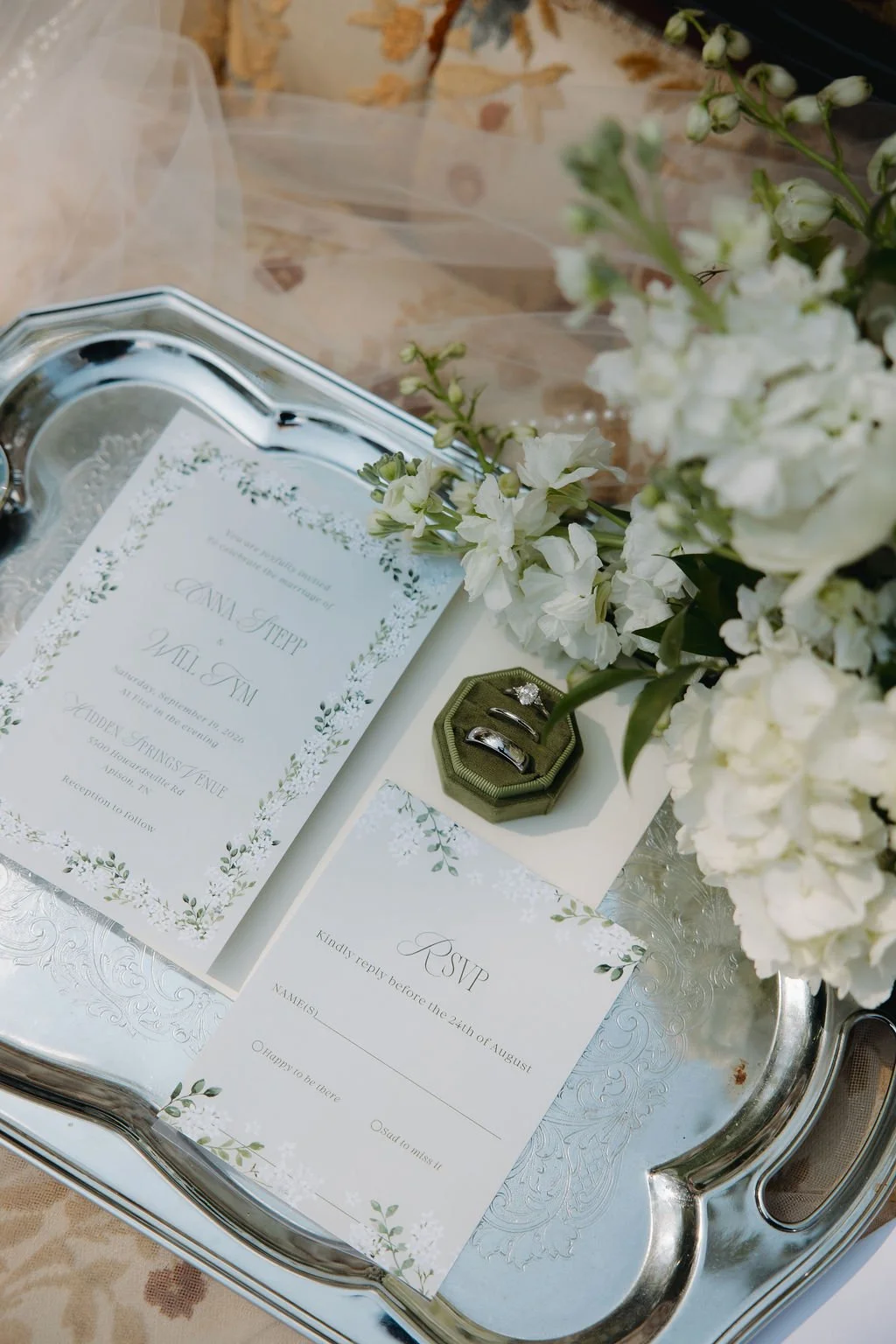
One of the first things couples learn during wedding planning is that the number of people you invite is not necessarily the number of people who will attend.
There is no standard RSVP percentage because attendance depends on the location of the wedding, the time of year, the guest list and how far people have to travel. As a general planning estimate, local weddings may see roughly 75% to 85% of invited guests attend, while weddings that require significant travel can have a lower attendance rate, sometimes around 40% to 60%.
For example, if you invite 150 people to a primarily local wedding, a 75% to 85% attendance rate would mean approximately:
75% attendance: 113 guests
80% attendance: 120 guests
85% attendance: 128 guests
That does not mean you should automatically assume only 120 people will attend. It simply gives you a realistic range to consider while planning.
Destination weddings and weddings where most guests are traveling from out of town can work differently. Travel costs, hotel availability, work schedules and other commitments may affect whether someone can attend.
This is one reason it is helpful to separate your invited guest count from your expected attendance. Your invitation list determines who has the opportunity to attend, while your final RSVP count determines how many people you will actually need to accommodate.
Fixed vs. Variable Wedding Costs
Once you understand your guest count, the next step is understanding which wedding expenses actually change when you add or remove guests.
Some costs are essentially fixed. Others grow with every additional person.
Variable Costs: The Per-Guest Expenses
Variable costs are expenses that can increase as your guest count increases. These are the numbers where adding 20 more guests can make a noticeable difference.
Common examples include:
Catering:
Food is one of the clearest examples of a per-person expense. If your catering is $75 per guest, adding 20 guests adds another $1,500 before considering any additional taxes, service charges or other fees.
Bar service:
Depending on how your bar is structured, adding guests can increase the cost of alcohol, bartending, mixers and other supplies.
Rentals:
Tables, chairs, linens, place settings, glassware and other reception rentals are often calculated according to the number of guests. At Hidden Springs we include basic tables, reception & ceremony chairs, and linens in your package, so we are an example of a venue where this would be a fixed cost!
Cake and desserts:
A larger guest count generally means more servings.
Favors:
If you are giving each guest a favor, 50 additional guests means 50 additional favors.
Invitations and stationery:
This one can be slightly different because invitations are typically sent by household rather than individually. Still, a larger guest list can mean more invitations, envelopes, postage and additional stationery.
These are the expenses where your guest count can have the most direct impact.

Fixed Costs: The Expenses That Generally Stay the Same
Other wedding expenses do not necessarily increase because you invite more people.
These can include:
Venue rental
Photography
Videography
DJ or band
Wedding attire
Officiant
Certain décor and design expenses
Of course, there can be exceptions. A larger wedding may require a larger entertainment package, additional photography coverage or more décor. But in general, these expenses are less directly tied to the number of guests.
This distinction is important because cutting 20 guests does not necessarily mean your entire wedding budget will drop by the same amount. It primarily affects the expenses that are calculated per person.
The "Per-Guest" Reality Check
When couples start researching wedding budgets, they will often see a per-guest cost used to describe the overall price of a wedding. This can be a helpful way to understand the math, but it is not a one-size-fits-all number.
In Tennessee, wedding costs can vary significantly depending on the venue, location, catering style, bar service, rentals, season and overall level of customization.
For example, imagine two couples are each inviting 150 people.
One couple may choose a plated dinner, full bar, extensive rentals and individual favors. Another may choose a buffet, beer and wine, simpler rentals and minimal favors. Their per-guest costs could look very different even though they have the exact same guest count.
This is why we recommend looking at your wedding budget by category rather than focusing solely on one "average wedding cost" number.
The more useful question is: Which parts of your wedding budget increase when your guest count increases?
Once you know that, you can make much more informed decisions.

Three Ways to Manage the Math
1. Be Intentional With Plus-Ones and Children
Your guest list does not have to be complicated, but it does need clear guidelines.
Decide early how you want to handle plus-ones. Will every guest receive one? Will married and engaged couples automatically be invited together? Will long-term partners be included?
The same goes for children. Some couples invite children to the entire wedding, some include them only for certain guests, and others choose to have an adults-only celebration.
There is no universal right answer. The important thing is establishing your approach before the guest list starts growing through individual exceptions.
A few additional guests may not sound like much at first, but every person can affect catering, seating, rentals and bar service.
2. Create an A-List and B-List
If you have a target guest count, creating tiers can help you stay organized.
Your A-list should include the people you know you want at your wedding. Your B-list can include additional friends, extended family members or other guests you would be happy to invite if space becomes available.
The key is timing. B-list invitations should be handled carefully and sent early enough that guests do not feel like they were invited only because someone else declined.
This strategy can be particularly helpful when you have a firm venue capacity or a specific number in mind for catering and rentals.
3. Build Your Initial Budget Around Your Maximum Invite Count
One of the safest ways to approach the beginning of wedding planning is to budget for the maximum number of people you might realistically invite, rather than assuming some guests will decline.
If you think your final guest list could be anywhere from 120 to 150 people, use 150 when estimating your variable costs.
If fewer guests ultimately RSVP, you may have some room in the budget to adjust other priorities.
It is much easier to plan from a conservative number and come in lower than to build a budget around 120 guests and suddenly receive 148 yeses.
Your Guest Count Is More Than a Number
Your guest count affects the practical side of your wedding, but it also influences the experience itself.
A smaller guest list can mean more time with each person. It can make conversations easier, create more space during dinner and dancing, and allow you to be more intentional about the people surrounding you on the day.
That does not mean a large wedding is less meaningful. Some couples genuinely want a big celebration with everyone they love in one place. Others picture something smaller and more intimate.
The goal is not to find a magic number. It is to understand what your number means financially and logistically.
When you know how your guest count affects the rest of your wedding, you can make decisions based on what matters most to you instead of simply reacting to an ever-growing guest list.
A thoughtful guest count can give you more flexibility, more time with the people you love and, ultimately, a wedding day that feels like yours.
Schedule a Tour and come experience Hidden Springs for yourself.
Follow along with us for more real weddings, venue inspiration and planning tips:
Views at Sunset Ridge, A Room with a View,Lizton Lodge Blog,Homestead 32 Blog,The Postmark Blog