Wedding Seating Chart
When planning a wedding, couples make hundreds of decisions from choosing the wedding venue to finalizing the ceremony details and designing the perfect wedding reception. One decision that often causes more stress than expected is whether or not to have a wedding seating chart.
Some couples love the idea of a structured seating chart, while others prefer a relaxed, open-seating wedding reception. Both approaches can work beautifully, but the right choice depends on your wedding style, guest count, venue layout, and overall vision for your wedding day.
As a wedding venue that hosts countless wedding receptions, we’ve seen firsthand how both seating charts and open seating can impact guest experience, reception flow, and the overall feel of a wedding. Here’s a complete guide to help you decide whether or not a seating chart is right for your wedding including the pros and cons of both options.
What Is a Wedding Seating Chart?
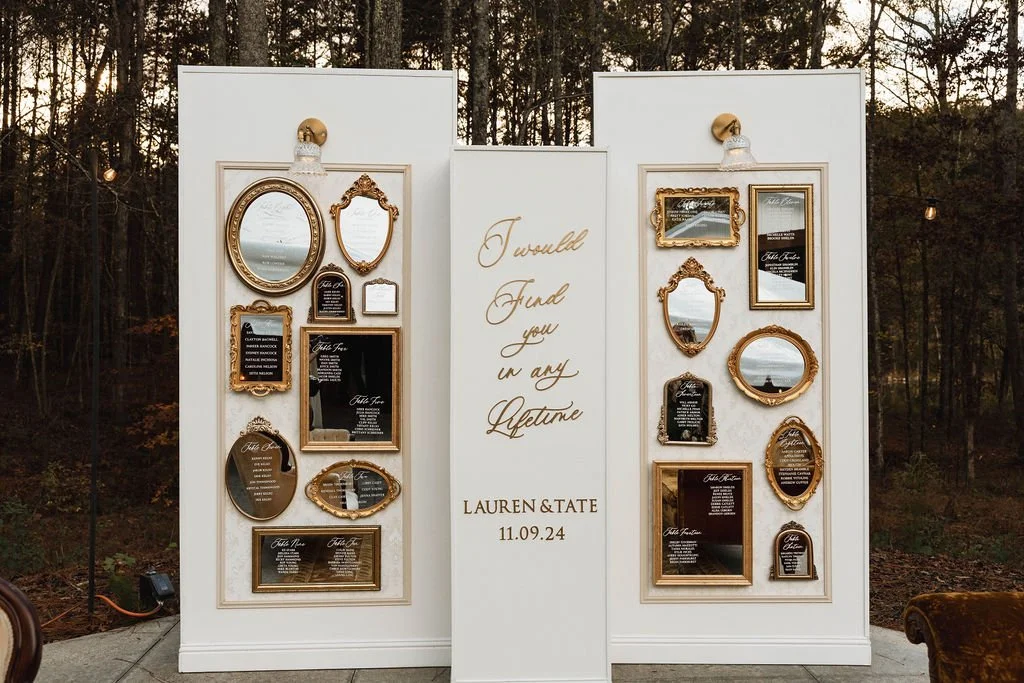
A wedding seating chart assigns each guest to a specific table for the wedding reception. This is typically displayed at the reception entrance so guests can quickly find their table before sitting down for dinner.
Some couples also choose assigned seating, which places each guest in a specific seat rather than just a table. While assigned seating is less common, it’s sometimes used for very formal weddings or plated dinner service.
Open seating, on the other hand, allows guests to choose their own seats and tables during the wedding reception.
Why Couples Choose a Wedding Seating Chart
Many couples feel hesitant about creating a seating chart, but there are several benefits that make this wedding planning step worthwhile.
1. Creates a Smooth Wedding Reception Flow
One of the biggest advantages of a wedding seating chart is how smoothly it allows the wedding reception to flow. When guests arrive at the reception and immediately know where to go, there is less confusion, crowding, and congestion.
Without a seating chart, guests often wander the reception space searching for friends, saving seats, or trying to rearrange tables. This can slow down dinner service, delay speeches, and create unnecessary chaos.
A seating chart helps the wedding reception begin smoothly and keeps the timeline on track.
2. Prevents Guest Confusion and Awkwardness
Walking into a large wedding reception without knowing where to sit can feel uncomfortable for many guests. Couples often underestimate how awkward this can be especially for guests who don’t know many people at the wedding.
A wedding seating chart removes that discomfort by giving guests clear direction. They feel welcomed, included, and taken care of, which immediately improves their wedding experience.
3. Helps Catering and Service Run More Efficiently
If your wedding includes a plated meal, buffet, or family-style dinner, a seating chart is almost essential.
Caterers rely on seating charts to:
Deliver meals accurately
Manage dietary restrictions
Serve tables in the proper order
Maintain timing for speeches and dancing
Without a seating chart, catering service can become slow and disorganized, which impacts the entire wedding reception timeline.
4. Prevents Table Imbalances
Without assigned tables, some guests naturally gravitate toward certain areas, leaving some tables overcrowded while others remain nearly empty.
A wedding seating chart ensures:
Balanced table numbers
Comfortable spacing
Better guest flow
This keeps the reception space visually pleasing and functionally organized.
5. Encourages Guest Interaction
A thoughtfully planned seating chart can actually enhance guest experience. Seating friends, family members, and coworkers together helps spark conversation, build new relationships, and create a warm, welcoming atmosphere.
Many couples enjoy creating table groupings that encourage guests to connect especially if different parts of their lives are coming together for the first time.
Potential Downsides of a Wedding Seating Chart
While seating charts offer many benefits, they’re not always the best fit for every wedding.
1. They Take Time and Mental Energy
Creating a wedding seating chart can feel overwhelming. Couples often struggle with:
Dividing family dynamics
Balancing friendships
Managing guest expectations
Handling last-minute RSVPs
It requires thought, emotional energy, and patience especially for larger weddings.
2. Last-Minute Changes Can Be Stressful
Wedding guest lists often shift in the final days before the wedding. Illness, emergencies, and unexpected schedule conflicts can lead to last-minute cancellations.
When this happens, couples may feel pressure to rearrange the entire seating chart, reprint signage, or reorganize tables, which adds stress right before the wedding day.
3. Some Weddings Thrive on a More Relaxed Atmosphere
Certain wedding styles especially casual, outdoor, cocktail-style, or festival-inspired weddings may feel better without assigned seating.
For these weddings, flexibility and movement are part of the overall experience, and a seating chart may feel unnecessarily rigid.

Why Some Couples Choose Open Seating at Their Wedding
Open seating allows guests to choose their own seats and tables during the wedding reception. This option works best for smaller, casual, or non-traditional weddings.
Here are some reasons couples prefer open seating.
1. Creates a More Relaxed Wedding Reception
Open seating often creates a laid-back atmosphere. Guests can move freely, sit with different people, and mingle throughout the wedding reception.
For couples who want their wedding to feel casual, social, and unstructured, open seating can support that vibe.
2. Eliminates Seating Chart Stress
Some couples simply don’t want the stress of creating a seating chart. With open seating, they avoid difficult decisions about where guests should sit and let things unfold naturally.
This approach works well for couples who trust their guest group and prefer a more spontaneous wedding experience.
3. Works Well for Smaller Weddings
For intimate weddings with fewer than 60–75 guests, open seating can work beautifully. With a smaller guest count, guests can easily find seats, and the reception space typically feels more comfortable and flexible.
Potential Challenges of Open Seating at a Wedding
While open seating can work well in certain situations, it does come with potential challenges.
1. Slower Reception Flow
Without a seating chart, guests often spend extra time searching for seats, saving seats for friends, or rearranging chairs. This can delay dinner service, speeches, and the overall reception timeline.
2. Uneven Table Distribution
Some tables may fill up quickly while others remain nearly empty, leading to awkward spacing and inefficient service.
3. Guests May Feel Uncomfortable
Not all guests enjoy navigating social dynamics. Older guests, out-of-town guests, or guests who don’t know many people may feel anxious trying to find where to sit.
A seating chart removes that uncertainty and makes guests feel cared for.
When a Seating Chart Is Strongly Recommended
From a wedding venue perspective, we highly recommend a seating chart if:
You have over 75 guests
You’re serving a plated dinner
You’re hosting a formal wedding reception
Your venue layout includes assigned tables
You want a smooth, efficient timeline
In these situations, a wedding seating chart dramatically improves organization, flow, and guest comfort.
When Open Seating Can Work Well
Open seating can be a great option if:
You’re hosting a small, intimate wedding
Your wedding style is casual or relaxed
You’re offering buffet or cocktail-style dining
You’re prioritizing movement and mingling
In these cases, open seating may better reflect the tone and experience you want for your wedding.
Hybrid Option: Assigned Tables, Open Seats
Many couples choose a hybrid approach assigning guests to tables but allowing open seating within each table.
This option provides:
Clear direction for guests
Flexibility within seating
Reduced stress for couples
It’s one of the most popular wedding reception layouts and works beautifully for most weddings.
Should You Have a Wedding Seating Chart?
At the end of the day, there is no universal right or wrong answer. The best choice depends on your wedding size, venue, guest experience goals, and personal comfort level.
A wedding seating chart offers structure, clarity, and smooth flow. Open seating offers flexibility, spontaneity, and relaxed energy.
The key is choosing the option that supports your overall wedding vision and helps your wedding ceremony and reception feel joyful, comfortable, and memorable.
No matter which option you choose, thoughtful planning and intentional decisions will ensure your wedding day unfolds beautifully and that’s what truly matters.
Emerald Acres Events Contact, Spain Ranch Contact, Terrace 167 Contact, Meadows Wedding Venue Contact, Union 12 Tour